
Diploma In Optometry Technician (DOM)
- Home
- Diploma In Optometry Technician (DOM)
About the Course
Course Duration
Candidates should have passed Class 12th (or equivalent) from a recognized board. Preferred background: Physics, Chemistry, Biology or Mathematics in 10+2
Eligibility Criteria
Passed 10+2 (Higher Secondary) from a recognized board. Science stream preferred. Minimum aggregate marks vary by institution (often around 40-50%)
Course Objectives
- Accurately record visual acuity and measure refractive errors using retinoscopy, subjective refraction, and other refraction techniques
- Prescribe and dispense spectacles, contact lenses, and other optical or low-vision aids; design, fit and advise corrective lenses.
- Use common ophthalmic instruments and equipment (e.g. slit lamp, tonometer, retinoscope, ophthalmoscope etc.) for eye examination and diagnosis.
- Prescribe and dispense spectacles, contact lenses, and other optical or low-vision aids; design, fit and advise corrective lenses.
Subjects Covered
- Basic Medical & Biological Sciences
- Ocular Anatomy & Physiology
- Optics & Ophthalmic Optics
- Basic Eye-care Practices
- Clinical Optometry & Refraction
- Ophthalmic Instruments & Diagnostics
- Contact Lens Technology & Spectacle Dispensing
- Ocular Diseases & Pathology
Career Opportunities
A Diploma in optometry technician opens the door to multiple job roles in eye care, hospitals, optical centers, and community health programs. After completing the course, students can work as:
Optometry Technician
Ophthalmic Assistant
Refractionist
Optical Shop Technician
Contact Lens Technician
Eye Clinic/Hospital Assistant
Job Roles Includes
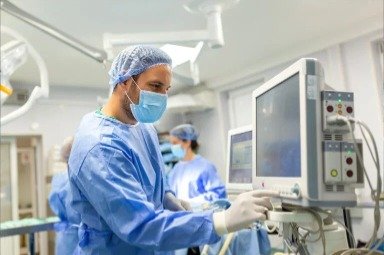
- X-Ray Technician
- MRI Technician
- CT Scan Technician
- Radiology Assistant
- Medical Imaging Technician
- Radiographer
- Diagnostic Imaging Assistant
- Radiology Equipment Operatory Assistant
Why Choose Diploma inOptometry Technician (DOM)
Future Scope

• Growing demand for skilled imaging technicians in hospitals & diagnostic centers
• Increased use of advanced imaging technologies like MRI, CT, Digital X-ray
• Opportunity to work in multispecialty & corporate hospitals
• High chances of career growth with experience & specialization
• Scope to pursue higher studies like B.Sc. MIT, B.Sc. Radiology, or advanced imaging courses
• Opportunity to work in government health sectors & medical colleges
• Rising need due to expanding healthcare infrastructure and population
• Possibility to move into teaching, research, or equipment handling roles
